
Ready to Transform Your Restaurant Business?
Join thousands of restaurant owners who’ve ended staffing headaches, botched orders, and cost overruns with Tarro.
Call:

You have been thinking about the second location for a while. You know the neighborhood. You know the demand is there. But every time you get close to pulling the trigger, the same question stops you: Who runs this place when I am not here?
That question has a real answer. Not 'hire more people' and not 'work harder.' The pizza shops that successfully scale to a second location do it by building specific systems at location one that operate reliably without the owner in the room. Phones answered. Deliveries covered. Customers retained. Those three things running on their own is what a second location actually requires.
That is exactly what Tarro was built to do, and it is why operators like Pete at Pete’s Pizza rely on us to help make running nine locations easier.
Talk to any pizzeria owner who tried to expand and hit a wall. The story sounds the same every time. It is not a lack of ambition. It is 3 compounding problems that make the math in a second location hard to justify.
Inconsistent operations break when you scale. When the owner is on the floor, quality holds. Phone orders get handled a certain way. Deliveries go out on time. Upsells happen. The moment the owner steps back, service quality drifts. A second location does not fix inconsistency; it amplifies it. Consider the phone alone: every call depends on who picks up, how rushed they are, and whether they remember to upsell. Losing just 5 calls a night at an average ticket of $25 adds up to over $850 in lost revenue per week, nearly $45,000 a year in orders that never made it to your oven. Standardize the phones, the delivery process, and the customer experience, and you have something worth opening twice. Without that, a second location just copies the same vulnerabilities at a higher cost.
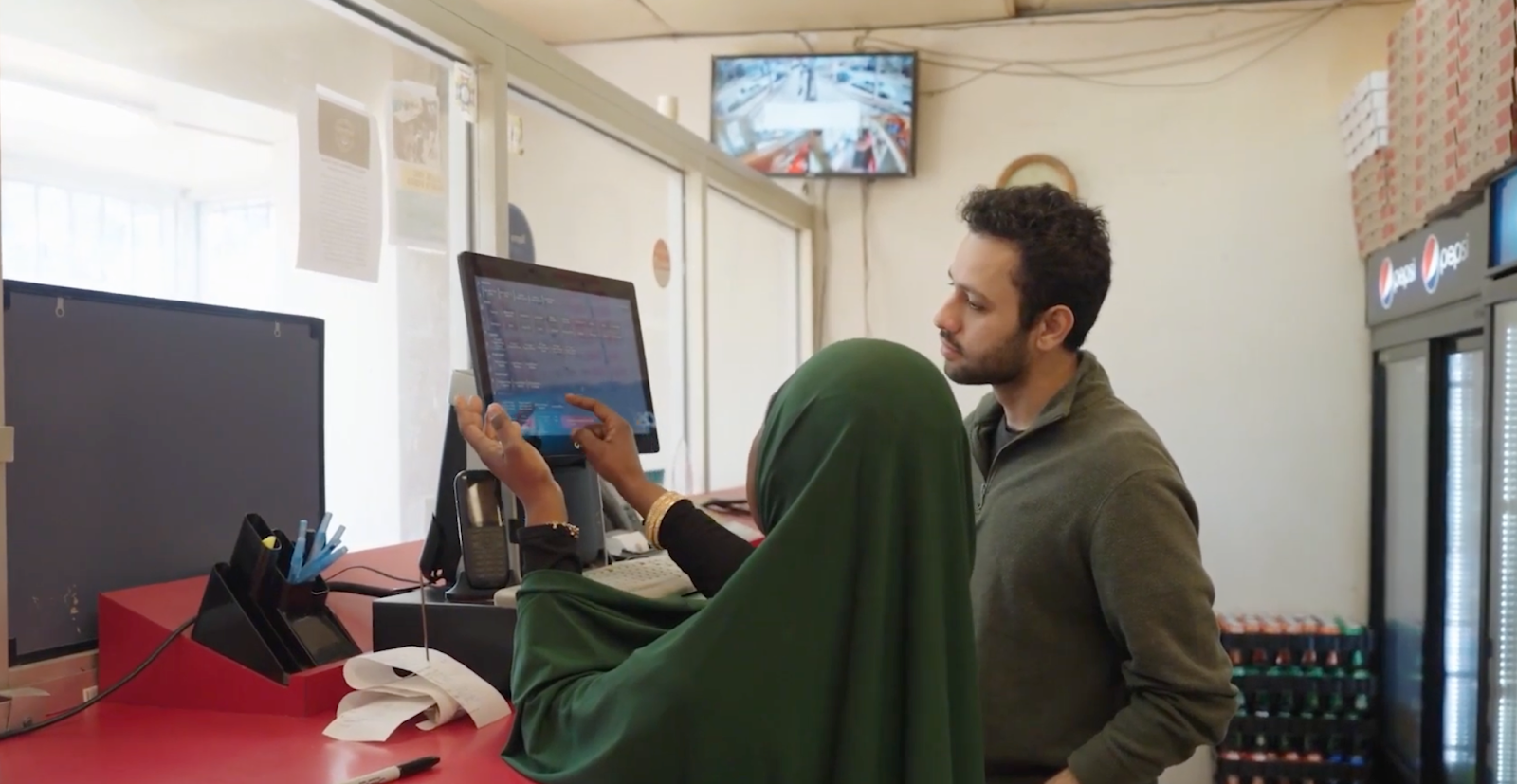
Staffing is hard, and delivery drivers are harder. Counter staff quit without notice. That problem is difficult enough. The delivery driver shortage is a separate crisis. Pizza chains reported a 15% vacancy rate in delivery driver roles as recently as 2024. According to QSR Magazine, the shortage pushed Domino's delivery comps down 10.7% in a single quarter. Independent shops feel this even harder: no brand name to recruit behind, no HR team, no driver pool to tap when someone no-shows mid-shift on a Friday. When drivers are unavailable, orders back up. Customers wait. Some do not come back.
Thin margins leave no room for these gaps. Independent pizzerias already operate on margins of just 5 to 15%. Labor costs are rising on both ends: more than 56% of operators reported hourly pay increases of 4% or more, according to Pizza Today's 2025 Industry Trends Report. On top of that, third-party delivery apps take a 30% commission on every order. Every inefficiency in staffing, every missed call, every DoorDash order is a dollar your second location never sees.
To run a pizza shop without being there, you need to fix these three problems first: consistency, staffing, and margin leakage.
Managing multiple pizza locations only works if your systems work independently. Owners across the country are doing exactly that with Tarro. Pete, of the nine-location
Pete's Pizza in Philadelphia put it simply: "With Tarro handling our phones and delivery, it feels like the options are endless. We can keep opening new locations and keep growing."
That kind of confidence does not come from hoping things go smoothly on a busy Saturday. It comes from having infrastructure that performs whether you are onsite or not.
The Problem: Phones ring nonstop during the rush. Counter staff are stretched between in-person customers, tickets, and incoming calls. Calls get dropped. Customers sit on hold. Orders slip through, and some of those customers never call back. This is exactly what breaks when owners try to run two locations. The phone becomes inconsistent, and revenue becomes unpredictable.
With Tarro: Every call is answered by a phone answering specialist, a real person who has spent years doing exactly this job. These are not general customer service reps. They are phone order professionals who train specifically on pizza menus, pizza upsells, and the rhythm of a busy pizza shop. They never miss a detail, whether it’s a 'half-and-half' topping or a critical 'no-onion' allergy note.
With AI working as their co-pilot, Tarro specialists take orders with 99.5% accuracy and automatically upsell drinks, sides, and add-ons that your counter staff is too slammed to remember. The result is a 5% lift in average ticket size, consistently, across every shift.
Judy at Judy's Pies saw this firsthand: her hourly staff routinely skipped the small upsells she would always make herself. With Tarro's phone answering specialists reading order history and surfacing high-margin items on every call, her average ticket lifted roughly 5%, adding +$1,037 per week in profit at her location.
Unlimited lines mean no busy signals, ever. If a call drops, Tarro calls back. Pete at Pete's Pizza was spending $895 per week per location in phone order labor before Tarro. Real people replaced that entire cost, and Pete netted +$720 per week in profit per location. For Mikey at Mikey's Pizza, rush calls used to pile up and orders slipped away. With Tarro, that stopped. He added $245 per week in profit at that location alone.
This is not a phone line. This is a profit center that captures every dollar your kitchen can produce, whether you are on the floor or across town at your second shop.
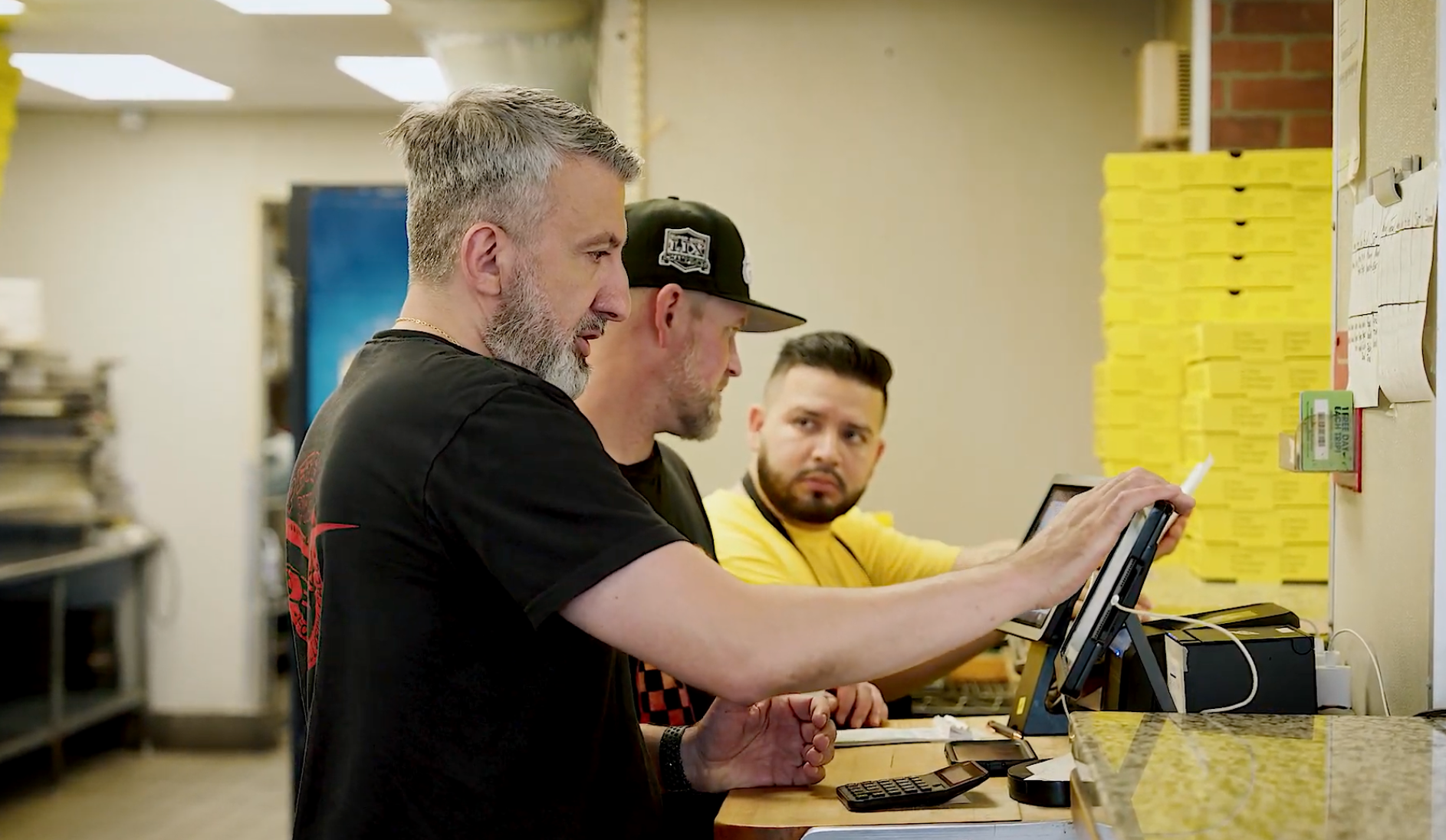
The Problem: When you rely on third-party delivery apps to cover your orders, you hand over both the margin and the customer. Apps like DoorDash take up to 30% per order and own the data on every customer who orders through them. When an in-house driver cannot make it, the choice becomes: lose the order, absorb the app commission, or scramble. None of those options scales. Staying within a two to three-mile radius to keep deliveries manageable limits your customer base and your revenue ceiling before you ever think about a second shop.
With Tarro: Tarro's delivery network works as a backup and overflow layer that supports your in-house drivers. Your drivers handle what is nearby. Tarro handles the longer runs, covering up to 15 miles. No new hires. No added insurance costs. This is how you reduce driver costs without reducing your delivery radius.
Moh at Pizza Factory faced constant complaints about long delivery runs and inefficiency. With Tarro handling the longer hauls, his own drivers stayed close to the shop, response times improved, and he unlocked $1,200 in new sales per week, netting $840 in additional weekly profit.
Nick at Athena's Pizzeria was paying $3,400 per week in driver wages. Tarro helped him cut that to $1,700 per week, on top of insurance and tax savings. That is not a rounding error. That is the capital a second location is built on.
The Problem: Every order placed through a third-party app is an order that builds their database, not yours. Shops that rely on app platforms to drive delivery volume are essentially renting their customer relationships. When someone reorders through DoorDash, DoorDash captures that loyalty, promotes your competitor in the same session, and bills you 30% for the privilege. By the time you open a second location, you may find that many of your customers are loyal to DoorDash rather than your restaurant, and each order comes with up to 30% less profit.
With Tarro: Customers still order directly from your restaurant using the same phone number you’ve always had. There is no delivery commission, and they save about $10 per order compared to app-based delivery. That savings gives them a real reason to order directly through your shop. Over time, you reclaim control over the customer relationships and data that drive repeat business at both locations.
Tarro also includes free monthly SMS promotions sent to your customer list. No marketing agency. No ad spend. No setup on your end. Bill at Crust & Craft added +6 orders per week from Tarro's free SMS alone.
Using Today’s Pizza co-owner’s words: “Honestly, we would love to eliminate DoorDash, Uber Eats, and Grubhub, and rely solely on Tarro so we wouldn’t have to pay the fees.”
Don't start from zero at your next location. Build a customer list you actually own with one year of free SMS marketing. Claim your $3,000 in free marketing value now. [See How Tarro Scales Your Business]
Here is what changes when you fix these problems:
Tarro has been working with independent pizza shops for 13 years. With millions of orders processed monthly and a network of operators ranging from single-location shops to nine-location chains, the infrastructure is proven at every stage of pizza restaurant expansion.
Pizza restaurant profit margin is thin enough without losing 30% to apps or $2,000 a month to a single driver. The owners who scale are not the ones who work the longest hours. They are the ones who build the right systems early, so the second location opens with confidence instead of chaos.
"Over time, I have really grown to like it. I would even dare say love it. Because it has streamlined my front-of-house operations in a way that I did not even see coming."
— Aqil, co-owner, Today's Pizza
.png)
Stop letting the rush manage you. If these problems are not fixed, opening a second location only makes them worse. Fix them, and scaling becomes predictable.
Start your free trial today. No risk. Cancel anytime. See what your numbers look like when every call gets answered, every order lands accurately, and your delivery operation scales without adding payroll.
The answer is systems, not people. Specifically, systems that handle the two highest-failure points when an owner steps back: phones and delivery. Tarro's Phone Answering Specialists cover every call with 99.5% accuracy, and Tarro's overflow delivery network handles runs your in-house drivers cannot. When those two operations run without you, the shop runs without you. That is the foundation that makes managing multiple pizza locations actually workable.
Tarro addresses the three main pressure points that prevent pizza restaurant expansion: missed phone orders, high delivery costs, and DoorDash commission bleeding margins dry. By answering every call with 99.5% accuracy, extending your delivery range without adding drivers, and charging 0% commission, Tarro builds the margin and operational stability you need before signing a second lease.
Two signals matter most. First, your first location generates consistent, predictable revenue without requiring your daily presence to function. Second, your key systems, specifically phones and delivery, perform reliably whether or not you are on the floor. If either still depends on you showing up to catch the gaps, the shop is not yet ready to replicate. That is the bar Tarro helps you clear.
Phone answering specialists answer every call, with AI working as their co-pilot to support accuracy and speed. This is not an automated phone tree. Tarro's pizza phone order staffing model puts trained specialists on the line, people who know how to open a second pizza location's worth of call volume without missing a beat. Tarro's specialists are trained specifically for pizza ordering, upselling, and customer service.
Third-party apps typically charge restaurants 25 to 30% commission per order. Tarro charges 0% commission. Customers also save approximately $10 per order compared to app-based delivery, which gives them a real reason to order directly through your shop and keeps them in your customer ecosystem.
Tarro's delivery network is designed as a backup and overflow layer, not a replacement. Your drivers handle nearby orders. Tarro handles longer runs, up to 15 miles, so your drivers stay efficient and your customers on the edge of your range still get served. You control how and when Tarro delivery activates. This is also how to manage multiple location delivery operations without tripling your driver payroll: your in-house team covers what is close, and Tarro covers the rest.
By submitting this form, I agree to the Privacy Policy
*Promotions subject to terms and conditions. Learn more here.
%20(1).png)
How to run your pizza shop without being there and open a second location in 2026. Tarro helps pizzerias standardize operations, solve driver shortages, and scale profitably.
Read more
How to run your pizza shop without being there and open a second location in 2026. Tarro helps pizzerias standardize operations, solve driver shortages, and scale profitably.
Read more
Crust & Craft fixed missed calls, expanded delivery to 10 miles, and added $14,000/month. See how Tarro made it happen for this NY pizza shop. Get a free consult.
Read more
Crust & Craft fixed missed calls, expanded delivery to 10 miles, and added $14,000/month. See how Tarro made it happen for this NY pizza shop. Get a free consult.
Read more
